


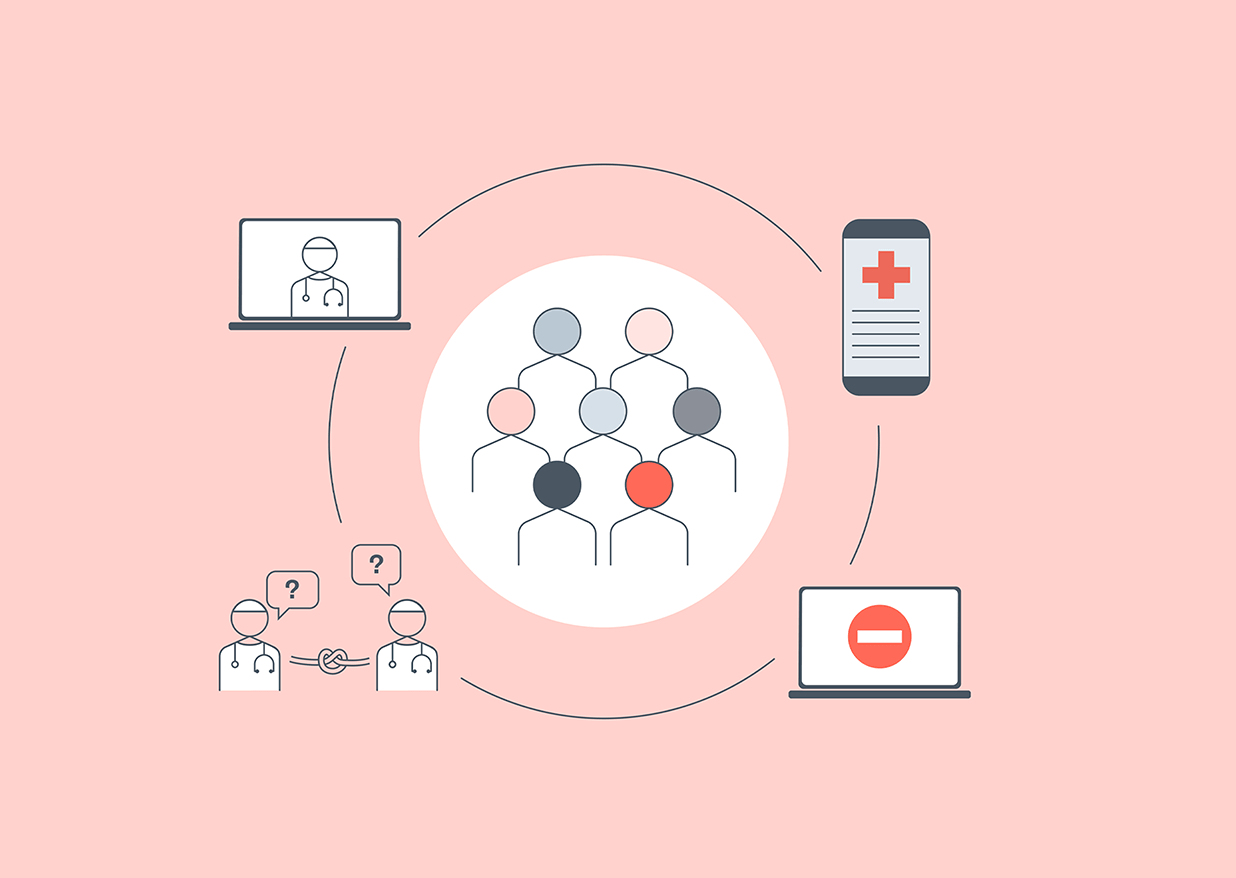
Nationwide, new patients now face an average wait of 26 days to schedule an appointment.
What is causing this delay?
There are 1.1 million physicians serving 340 million Americans, approximately 96,430 fewer physicians than required in 2026.
What about nurses?
The gap between the supply and demand of nurses is even greater, with a deficit of 263,870 registered nurses in 2026. Unfortunately, this shortage will get worse before it gets better, with an estimated deficit of 267,330 RNs in 2028.
This situation requires a significant restructuring of how health systems provide care.
The Healthcare Worker Shortage in 2026
Workforce shortages are eroding in-person healthcare access nationwide.
The 2026 Health Care Workforce Scan notes that healthcare will generate 24% of all new U.S. jobs this decade, yet the field is still projected to have 64,000 fewer nurses by 2030. It also says 1 in 6 Americans is now older than 65. An aging population increases chronic disease management, follow-up care, and behavioral healthcare demands on a system already under strain.
Administrative burden is making the shortage worse by pushing clinicians away from traditional bedside care. The report highlights rising clinician burnout, persistent turnover, and the impact of emotional stress as the top reasons nurses leave their roles. It also points out that the cost of replacing a single bedside nurse exceeds $61,000, which means retention is not just a staffing issue but a major financial one.
Shortages in Rural and Urban Settings
Declining in-person healthcare access hits rural and urban settings differently.
Rural areas face clinic closures, broad shortages of primary care, specialty, dental, and behavioral health professionals, and a disproportionate share of primary care shortage areas, often referred to as medical care deserts. In those regions, patients may be hours from the nearest exam room, making routine follow-up a serious logistical barrier.
Cities have a different problem: volume. Even when care is geographically close, high-demand systems can reach capacity, creating referral loops that leave patients waiting months for specialty care.
The burden falls hardest on patients with limited transportation, inflexible work schedules, or caregiving responsibilities, because a missed appointment can mean starting over in the queue.
Virtual-First Care Models Increase Access
Telehealth is increasingly functioning as a pressure valve for the system, not just a convenience layer. The Workforce Scan says hospitals are expanding virtual care, complex care coordination, and AI-supported roles because digital tools work best when paired with redesigned workflows.
That matters because virtual visits can reserve in-person slots for patients who truly need physical intervention, while lower-acuity follow-up can move online.
This hybrid care model is especially useful for older adults and patients managing chronic conditions between appointments. Organizations are using virtual communication tools, remote monitoring, and hospital-at-home approaches to extend care where in-person services are hard to reach.
In practice, that means digital oversight can help keep complex patients stable while they wait for physical follow-up in a system where the next opening may still be weeks away.
The NLC Facilitates Telehealth Across State Lines
As more states join the Nursing Licensure Compact (NLC), it has become much easier for qualified nurses to provide telehealth across state lines without obtaining a separate license in each jurisdiction.
The NLC allows nurses in participating states to practice in other compact states with a single multistate license, removing a major barrier to scaling virtual care.
For healthcare administrators, that means it is now more practical to build telehealth teams that can extend coverage beyond a single state while still following state practice rules. That matters because telehealth nursing depends on having licensed clinicians available where the patient is located, and compact status simplifies that logistics problem for multi-state systems.
The NLC now includes 41 states, with a few more pending, which broadens the talent pool for virtual and hybrid care models.
In practice, a larger compact network can help facilities reduce access gaps, maintain continuity of follow-up care, and staff telehealth services more flexibly across a wider region.
Healthcare Staffing Solutions for Facilities
For facilities, the answer is not simply “more telehealth.” It’s a better workforce design that keeps scarce clinicians focused on the highest-value work.
Hospitals are using team-based care, float pools, internal agencies, and real-time scheduling tools to cover gaps and reduce premium labor costs. Some organizations are even adding advanced practice providers and rethinking internal roles to expand access without overloading physicians and nurses.
Flexible staffing models matter because the shortage is often a distribution problem as much as a supply problem. Facilities that use healthcare staffing platforms like Nursa can fill in-person shifts more quickly and avoid canceling clinics or turning patients away during demand spikes.
That kind of flexibility helps protect in-person access while telehealth absorbs appropriate volume.
Telehealth Improving In-Person Healthcare Access
The future of healthcare delivery will likely be split into 2 layers:
- In-person care will become a more specialized touchpoint for procedures, exams, and high-acuity visits.
- Preventive care, chronic disease follow-up, and care coordination will continue to move virtual.
The report also suggests that AI and automation will increasingly support scheduling, documentation, and patient flow, which should reduce delay if leaders use those tools thoughtfully.
For administrators, the strategic goal is not choosing telehealth vs. in-person care.
It is building a system where both work together so patients can move to the right setting faster, and clinicians spend more time on care rather than on friction.
Technology Is Revolutionizing Access to Care
As healthcare challenges arise, so do innovative solutions. Technology is expanding the limits of healthcare delivery.
- With telehealth, physicians and nurses can often practice across state lines, helping to bridge the gap between supply and demand in healthcare shortage areas and reducing primary care wait times.
- Digital tools help automate administrative processes, streamlining staffing and scheduling.
Facilities can reduce the impact of the healthcare worker shortage in 2026 by incorporating digital solutions into their workflows and care delivery strategies.

