
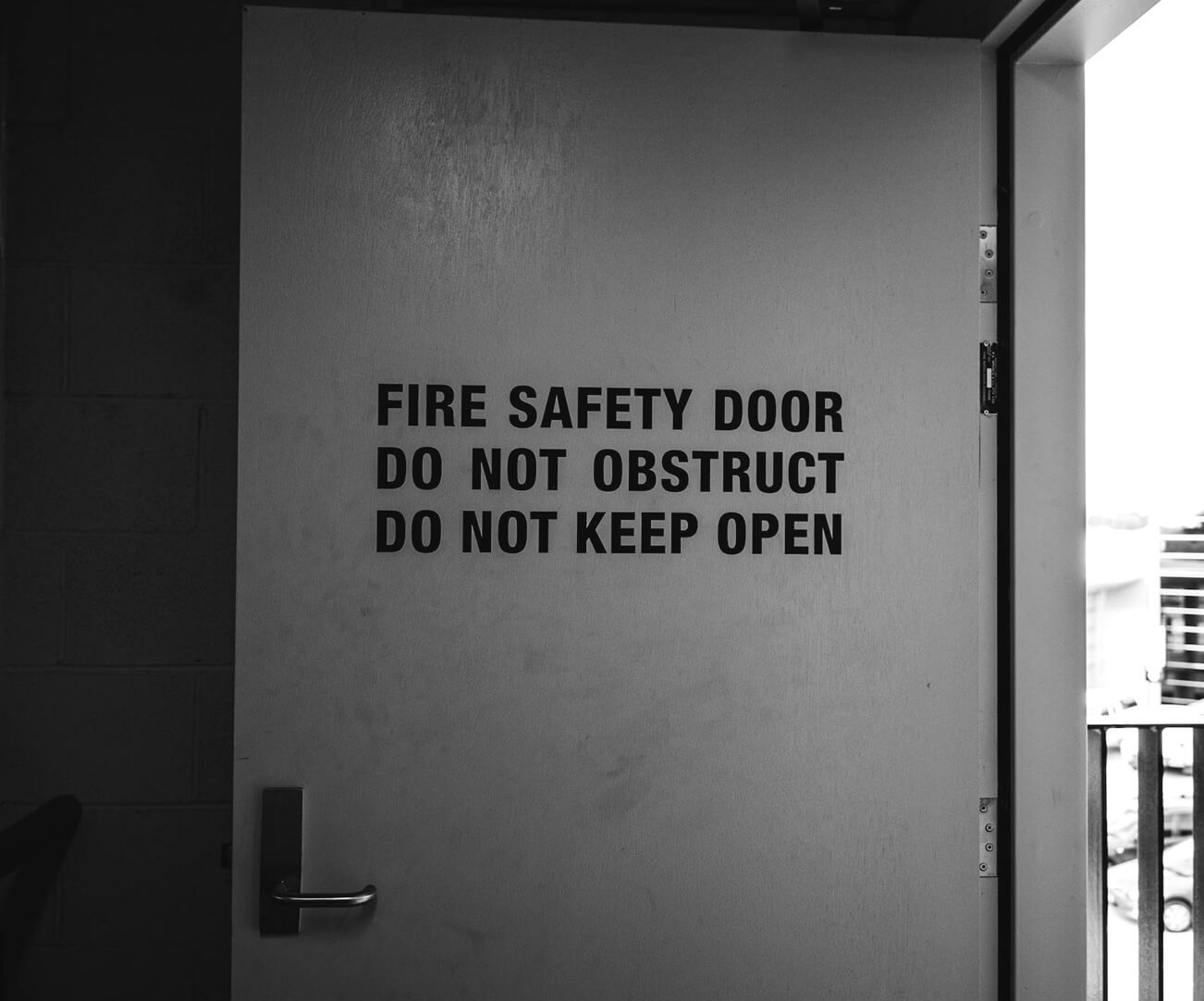
Fire doors are only as good as the hardware fitted to them. You can install a fully certified fire door leaf and frame—but if the ironmongery isn’t compliant, the door won’t perform as intended in a fire.
In the UK, fire door performance is governed by standards such as BS 476 Part 22 and BS EN 1634-1, with hardware requirements guided by documents including Approved Document B (Building Regulations) and industry schemes like Certifire. The key principle? Every component must be suitable for use on a fire door and, ideally, third-party certified.
Let’s break down the essential ironmongery components required for compliance.
1. Certifire Hinges
Why hinges matter
Hinges carry the entire weight of the fire door and ensure it remains correctly aligned within the frame. During a fire, extreme heat can cause warping and movement. If fire door hinges fail, the door may drop or twist—compromising the seal and allowing fire and smoke to spread.
What’s required for compliance?
- Minimum of three hinges per door leaf
- Hinges must be CE or UKCA marked
- Must be third-party certified, ideally under the Certifire scheme
- Correct fire rating (e.g., FD30, FD60)
Certifire-approved hinges have been independently tested for fire resistance and durability. They’ll carry certification marking and be traceable back to a specific fire test.
Key compliance considerations:
- Match hinge grade to door weight (check BS EN 1935 classifications)
- Ensure compatibility with door closers (closers add stress)
- Use correct screws supplied by the hinge manufacturer
- Fix into reinforced areas where required
Cutting corners on hinges is one of the most common fire door failures identified during inspections.
2. Intumescent Strips
What they do
Intumescent strips are critical for sealing the gap between the door leaf and frame during a fire. When exposed to heat, they expand dramatically—filling the clearance gap and preventing flames and hot gases from passing through.
Without them, even a certified door will fail under fire conditions.
Compliance essentials:
- Installed either in the door edge or frame (as tested)
- Correct size and type as specified in the fire door’s test evidence
- Typically 10mm x 4mm for FD30 doors (but always check certification)
Some intumescent strips also incorporate cold smoke seals, which are brush or fin inserts that restrict smoke at ambient temperatures—particularly important in escape routes.
Important rules:
- Do not paint over intumescent strips
- Do not cut or interrupt strips around hinges unless permitted by test evidence
- Ensure continuous fit—no gaps at corners
Fire door certification depends on the exact configuration tested. Swapping or altering strips without checking compliance can invalidate the door’s fire rating.
3. Self-Closing Devices
Why they’re mandatory
A fire door only works when it’s closed. Self-closing devices ensure the door returns to the fully latched position after use, maintaining compartmentation.
In most commercial and multi-occupancy residential buildings, fire doors must be self-closing.
Types of compliant closers:
- Overhead door closers (surface-mounted or concealed)
- Concealed jamb closers
- Floor springs (for larger or glazed doors)
Closers must:
- Be CE or UKCA marked
- Be suitable for fire door use
- Meet BS EN 1154 (controlled door closing devices)
- Be correctly power-rated for the door size and weight
Installation matters
Even a certified closer can fail compliance if:
- It doesn’t fully close the door from any open position
- It slams excessively (risking damage)
- It’s adjusted incorrectly
- The latch doesn’t fully engage
Regular maintenance is also essential. A non-functioning closer is a compliance breach.
4. Approved Locks & Latches
The role of locking hardware
Locks and latches hold the door closed during a fire, resisting pressure from expanding gases. If the latch fails, the door may push open.
Not all locks are suitable for fire doors—even if they look similar.
Compliance requirements:
- Must be CE or UKCA marked
- Third-party fire tested
- Suitable for the door’s fire rating (FD30/FD60)
- Installed with appropriate intumescent protection where required
Look for products tested to BS EN 12209 (mechanically operated locks and latches).
Common compliant options:
- Mortice sashlocks (fire-rated)
- Mortice latches
- Bathroom locks (fire-tested versions only)
Key installation considerations:
- Follow the fire test evidence exactly
- Use correct intumescent kits behind forend and strike plates if specified
- Ensure correct backset and spindle alignment
- Avoid excessive cutting of the door core
Over-morticing (cutting too much material from the door edge) can significantly weaken fire performance.
The Bigger Compliance Picture
Fire door ironmongery compliance isn’t just about buying “fire-rated” products.
It’s about:
- Matching hardware to the specific door certification
- Using third-party certified products where possible
- Installing exactly as tested
- Maintaining hardware throughout the building’s lifecycle
Under the Regulatory Reform (Fire Safety) Order and the Building Safety Act, responsible persons and building owners must demonstrate due diligence. Poor hardware selection or installation can result in enforcement action—and more importantly, increased life risk.
Common Fire Door Ironmongery Failures
During inspections, assessors frequently find:
- Only two hinges fitted instead of three
- Missing or painted-over intumescent strips
- Non-self-closing doors wedged open
- Non-compliant locks fitted during maintenance
- Incorrect screws used in hinges or latch plates
Each of these can invalidate fire door performance.
Final Thoughts
Fire doors are life safety products—not just doors. And their performance depends heavily on the ironmongery attached to them.
To ensure compliance:
- Specify certified components
- Follow manufacturer test evidence
- Install correctly
- Maintain regularly
When in doubt, consult the door manufacturer’s certification data or seek advice from a qualified fire door inspector.
Because in a fire, every detail matters—and ironmongery is never “just hardware.”