


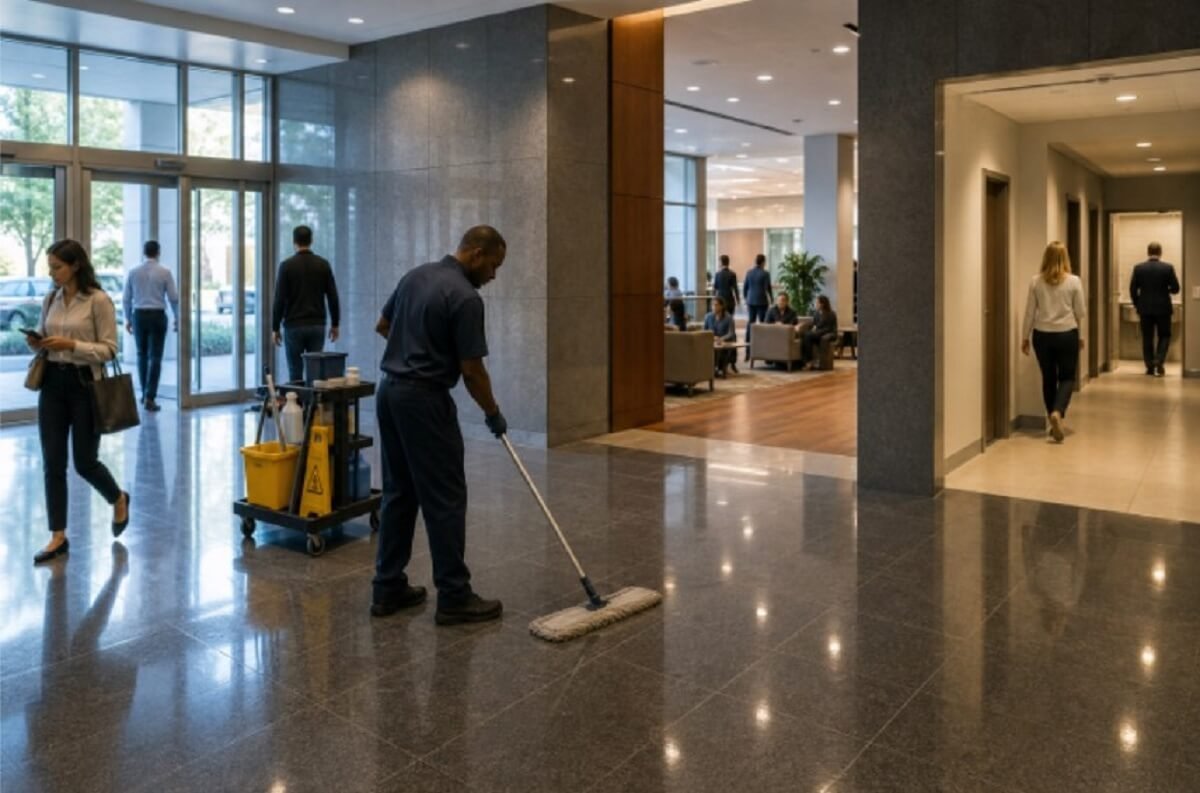
A commercial cleaning schedule is most effective when it follows the real activity inside a building, rather than a generic rule such as “clean everything once per day.” A quiet administrative office, a busy medical clinic, and a warehouse with frequent deliveries may have similar square footage but very different cleaning demands.
Key Takeaways
- Cleaning schedules should reflect how each area is actually used.
- Entrances, restrooms, breakrooms, and shared touchpoints usually need the most frequent attention.
- Short, zone-specific checklists make responsibilities easier to verify.
- Health and safety tasks should take priority over appearance-only work.
- Regular reviews help the plan keep up with weather, occupancy, staffing, and business changes.
Businesses that want help translating traffic patterns, operating hours, and facility requirements into a consistent program can explore janitorial cleaning solutions for Grand Junction businesses from Elite Cleaning Services. The company provides customized commercial janitorial programs for facilities across Grand Junction and the surrounding Grand Valley, with trained teams, daytime or nightly options, weekly quality inspections, and communication systems that help offices, medical facilities, industrial sites, schools, and public buildings maintain dependable standards.
Why a Fixed Cleaning Routine May Fall short
A uniform schedule can look organized on paper while missing the places occupants notice most. Foot traffic, employee count, visitor volume, meal periods, weather, waste production, and building layout all affect how quickly an area becomes untidy or unsafe. A private office may remain acceptable with service several times per week, while a public restroom may need multiple checks during one busy afternoon.
Recurring complaints often point to an operational gap, not simply a lack of effort. For example, restroom paper shortages, waste removal issues, and visible cleaning gaps can create frustration even when a team completes a general nightly routine. The answer is to identify where and when problems happen, then adjust the plan accordingly.
Start with a Facility Walkthrough
Before assigning tasks or service times, walk the facility during normal operations. The goal is to see how people move through the building and where cleaning needs develop.
- List every primary room, entrance, corridor, restroom, and shared area.
- Record the busiest times of day, including shift changes and meal breaks.
- Identify spaces that produce moisture, odors, dust, food waste, or packaging waste.
- Note areas that require attention while the building is occupied.
- Ask employees, tenants, or visitors which issues they notice repeatedly.
Divide the Building into Cleaning Zones
Grouping rooms by traffic and risk makes the schedule easier to manage than organizing it by square footage alone.
- High-use zones: Entrances, lobbies, public restrooms, breakrooms, elevators, and main walkways.
- Moderate-use zones: Offices, conference rooms, employee work areas, and secondary corridors.
- Low-use zones: Storage areas, supply closets, file rooms, and limited-access offices.
- Special-care zones: Kitchens, treatment rooms, production spaces, and rooms with sensitive surfaces or stricter hygiene needs.
Set Daily, Weekly, and Periodic Tasks
Separating routine work from deeper maintenance keeps daily checklists realistic. Daily work should focus on sanitation, safety, and visible conditions. Weekly and periodic work can address the buildup that does not require constant attention.
Daily Tasks
- Remove trash and recycling, clean and restock restrooms, and check breakrooms.
- Vacuum or mop high-use floors and wipe shared touchpoints.
- Inspect entrances for tracked-in dirt, moisture, or debris.
Weekly and Periodic Tasks
- Dust vents, ledges, partitions, furniture, corners, and baseboards.
- Detail conference rooms and shared equipment, then review supply levels.
- Schedule carpet spot treatment or extraction, hard-floor maintenance, interior glass cleaning, and high-surface dusting as needed.
Match Frequency to Building Traffic
Use actual use patterns to set the rhythm for each zone. A practical starting point may look like this:
- Public restrooms: Check several times during busy periods for cleanliness, odors, waste, and paper products.
- Main entrances: Provide daily care, plus extra attention during rain, snow, mud, or high customer traffic.
- Breakrooms: Clean daily and add midday checks when meal schedules create food waste or full trash bins.
- Private offices: Clean daily, several times weekly, or weekly based on occupancy, privacy, and employee needs.
Prioritize Health and Safety Tasks
When time is limited, rank work by risk before appearance. A detailed ledge can wait if there is a wet floor, an overflowing trash container, or an unstocked restroom.
- Address spills and slip hazards.
- Clean and restock restrooms.
- Remove overflowing waste and recycling.
- Sanitize appropriate high-touch surfaces.
- Clean food preparation and eating areas.
- Complete appearance-focused detailing.
Choose the Right Cleaning Time
Daytime cleaning supports fast spill response, restroom checks, and supply restocking. After-hours service is often better for vacuuming, detailed floor care, and spaces that need privacy or less disruption. Many facilities benefit from a hybrid approach, with daytime touch-ups followed by evening routine cleaning. Schedule noisy tasks outside peak business hours whenever possible.
Write Clear Checklists and Check Supplies
Each checklist should name the zone, assigned person or team, exact tasks, needed products, expected completion time, and space for initials or follow-up notes. “Clean restroom” is too vague. A useful instruction says to disinfect sinks and toilet surfaces, mop the floor, remove waste, and refill soap and paper products.
Before every shift, verify that soap, liners, gloves, paper products, floor signs, and approved products are available. Assign someone to report low stock or damaged equipment, store products safely, and keep a backup plan for equipment failure or unexpected spills.
Measure and Review the Schedule
Completed checkboxes do not always prove that the schedule works. Track missed tasks, repeated complaints, supply shortages, spill response times, inspection findings, and labor hours against building activity. If the same issue occurs more than once, change the timing, staffing level, task detail, or supervision.
Review the plan after renovations, office moves, staffing changes, business expansion, major events, seasonal weather changes, or a rise in complaints. Current cleaning and maintenance industry coverage also reinforces the value of documentation, accountability, staffing awareness, and service consistency for facility teams.
Common Questions About Commercial Cleaning Schedules
How Often Should a Commercial Building Be Cleaned?
Frequency depends on traffic, public access, employee count, building type, and the needs of each zone. There is no single schedule that fits every facility.
Is Nightly Cleaning Enough?
Nightly cleaning may cover routine maintenance, but busy restrooms, entrances, breakrooms, and shared areas can require daytime checks.
How Can a Business Reduce Missed Tasks?
Use shorter zone-based checklists, clear ownership, routine inspections, dependable supply control, and a simple way to report problems quickly.
Conclusion
The best commercial cleaning schedule is practical, measurable, and built around real building use. Giving high-traffic areas the attention they need, while avoiding unnecessary labor in low-use rooms, helps facilities stay cleaner, safer, and easier to manage as needs change.

