


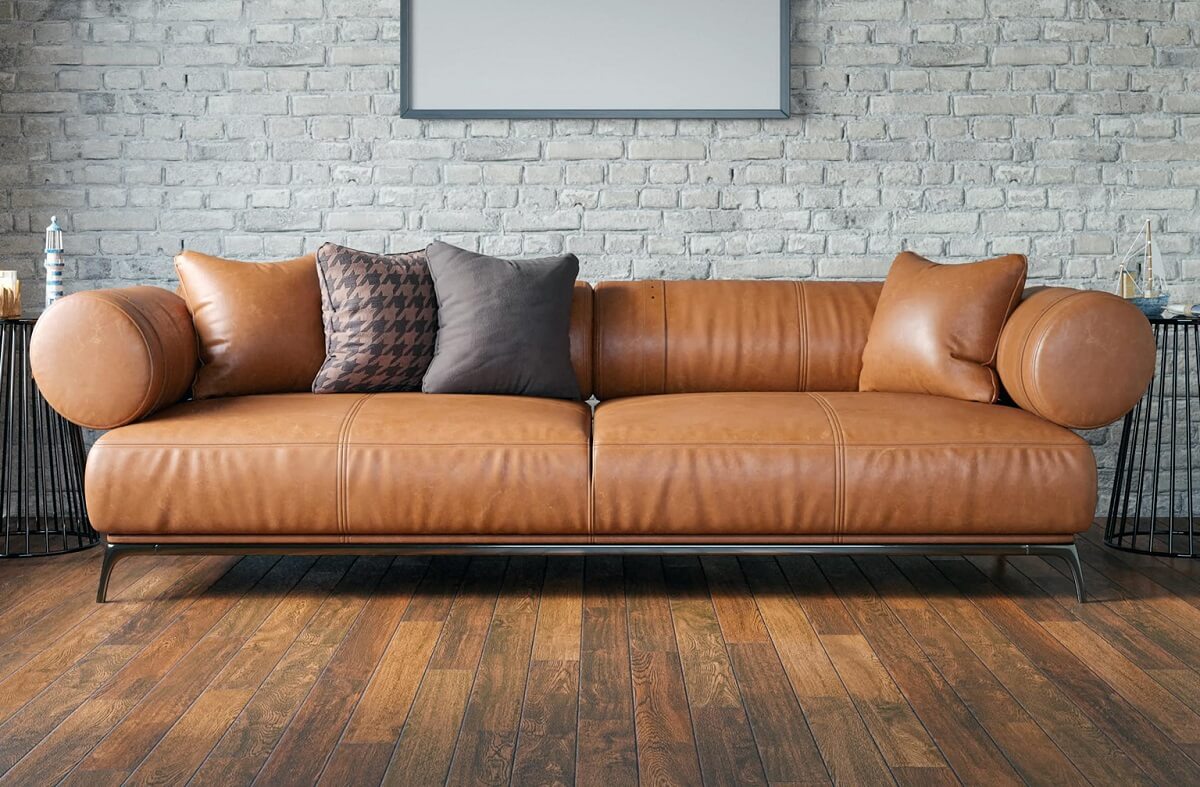
There are very few materials in the world of interior design that have endured as long, as confidently, and as consistently as leather. Civilisations have been working with it for thousands of years, and yet a well-made leather sofa or armchair placed in a contemporary living room looks no more out of place today than it would have in a Georgian drawing room or a mid-century modernist apartment. That kind of longevity is not accidental. It speaks to something fundamental about the material — its beauty, its practicality, its capacity to improve with age, and its extraordinary ability to adapt to almost any interior environment.
For anyone considering new furniture and weighing up their options, leather deserves serious consideration. This article explores why, examining the genuine benefits of leather furniture, the different types of leather available, the range of styles on the market, and how leather pieces can be integrated into a wide variety of interior design schemes.
The Genuine Benefits of Leather Furniture
Durability That Outlasts the Alternatives
The most compelling practical argument for leather furniture is simply how long it lasts. A quality leather sofa, properly cared for, can remain in excellent condition for twenty or thirty years — a timeframe that most fabric sofas cannot approach. Leather is a dense, tightly structured material that resists the kind of wear that quickly degrades woven fabrics: pilling, fraying, sagging, and the gradual flattening of cushion fibres.
This durability translates directly into value. The upfront cost of a leather sofa is typically higher than an equivalent fabric piece, but when that investment is spread across two or three decades of daily use, the cost per year often works out lower than replacing a fabric sofa every five to eight years. Leather furniture is, in the truest sense, a long-term investment rather than a short-term purchase.
Easy Maintenance and Cleaning
Leather is one of the most practical upholstery materials for everyday family life. Spills that would stain fabric — red wine, coffee, juice, food — can typically be wiped away from leather with a clean cloth before they have a chance to penetrate the surface. Pet hair, which embeds itself stubbornly in fabric weaves and requires specialist tools to remove, simply sits on the surface of leather and can be brushed or wiped away in seconds.
Routine maintenance is equally straightforward. Leather benefits from occasional cleaning with a dedicated leather cleaner and conditioning with a quality leather conditioner a few times a year, which keeps the material supple and prevents drying or cracking. This modest investment of time keeps leather looking excellent for years, whereas fabric upholstery often requires professional deep cleaning to achieve the same result.
The Character of Age: Leather’s Unique Patina
Perhaps the most singular quality of natural leather is what happens to it over time. Where fabric fades, sags, and eventually looks simply worn, quality leather develops a patina — a rich, deepened character that is the product of use, light, and the natural oils of human contact. A leather sofa that has been lived on for fifteen years has a warmth and depth of colour that a brand new piece cannot replicate, and that quality is actively desirable rather than merely acceptable.
This is not true of all leather — heavily pigmented, corrected-grain leathers age less expressively — but top-grain and full-grain leathers develop patina beautifully, and for those who appreciate materials that tell the story of their use, this quality alone sets leather apart from virtually every other upholstery option.
Hypoallergenic Properties
For allergy sufferers, leather has a significant practical advantage over fabric upholstery. Dust mites — a common trigger for allergic reactions and asthma — cannot colonise leather in the way they do in fabric. The smooth, non-porous surface of leather does not harbour the microscopic particles that accumulate in woven upholstery over time, making it a genuinely healthier choice for households where allergies are a concern. A simple wipe-down keeps the surface clean in a way that fabric simply cannot match.
Comfort That Improves Over Time
New leather furniture can sometimes feel firm, and some buyers are initially surprised that it doesn’t have the immediate plush softness of a fabric sofa. But leather breaks in rather than breaking down — it softens and moulds itself gently to the shapes and habits of those who use it, becoming more comfortable over time rather than less. The piece of leather furniture you own after five years of use is, in many respects, more comfortable than it was when it arrived.
Understanding the Different Types of Leather
Not all leather is the same, and understanding the differences between types is important when making a purchasing decision. Quality varies considerably, and the type of leather used determines everything from how the piece ages to how it should be maintained.
Full-Grain Leather
Full-grain leather is the highest quality and most premium option available. It is taken from the top layer of the hide and has not been sanded or buffed to remove natural markings — scars, grain variations, and other characteristics of the animal’s life are preserved and visible. This is not a flaw; it is precisely what makes full-grain leather so desirable. These natural variations mean that no two pieces are identical, and the leather develops the richest, most expressive patina over time.
Full-grain leather is the most breathable type, the most resistant to moisture over the long term, and the most durable. It is also the most expensive. Furniture made from full-grain leather represents the pinnacle of quality in the category and, with appropriate care, can genuinely last a lifetime.
Top-Grain Leather
Top-grain leather is the most widely used type in quality furniture. Like full-grain, it comes from the upper layer of the hide, but it has been lightly sanded and given a finishing coat to create a more uniform surface appearance and a slightly higher resistance to stains. The trade-off is a modest reduction in breathability and a less pronounced patina development compared to full-grain.
For most buyers, top-grain leather represents the ideal balance of quality, durability, appearance, and price. It still looks and feels unmistakably like genuine leather, ages well, and provides many years of reliable performance in everyday use.
Split-Grain Leather and Bonded Leather
Below top-grain in the quality hierarchy is split-grain leather, which is taken from the lower layers of the hide after the top grain has been separated away. It is typically embossed with an artificial grain pattern and finished heavily to approximate the appearance of better leather, but it lacks the durability and aging qualities of top-grain or full-grain. It is significantly less expensive and will show wear more quickly.
At the lower end of the market sits bonded leather — a product made from leather scraps and fibres bonded together with polyurethane onto a backing material. It can look convincing initially but tends to peel, crack, and deteriorate relatively quickly, often within a few years of regular use. While it carries a low price point, it delivers little of the durability and longevity that makes genuine leather furniture such a strong investment.
Corrected-Grain and Pigmented Leather
Corrected-grain leather has been surface-treated to even out inconsistencies in the hide, giving a very uniform, consistent appearance. It is often heavily pigmented and can be produced in a wide range of colours. It is more resistant to staining than aniline or semi-aniline leathers and is a practical choice for high-use environments, though it has less of the natural character and breathing quality of minimally processed types.
Aniline and Semi-Aniline Leather
Aniline leather is dyed exclusively with transparent dye, allowing the full natural surface of the hide to show through. It is exceptionally beautiful — rich, natural-looking, and soft — but offers little surface protection against staining and requires more careful maintenance. Semi-aniline leather adds a light protective coating while retaining much of the natural look and feel, and represents a practical middle ground for those who want the beauty of aniline with slightly greater everyday resilience.
Styles of Leather Furniture
The range of leather furniture styles available today is broader than many people assume, encompassing everything from deeply traditional Chesterfield sofas to clean-lined contemporary sectionals and everything in between.
The Chesterfield
No piece of furniture is more closely associated with leather than the Chesterfield sofa. With its distinctive deep button tufting, rolled arms level with the back, and sumptuous proportions, the Chesterfield has been a symbol of English craftsmanship and understated luxury since the eighteenth century. It is at home in traditional and period interiors — libraries, studies, country house drawing rooms — but has also proven remarkably adaptable to contemporary settings, where its bold character creates a striking contrast with modern surroundings. A deep tan or cognac Chesterfield in a white-walled, minimally furnished room is one of the most effective single decorating gestures available.
The Club Chair and Gentleman’s Armchair
The leather club chair — deep-seated, generously proportioned, with a low back and wide arms — originated in the gentlemen’s clubs of Victorian London and has never really gone out of fashion. It is the archetypal reading chair, and in leather it has a warmth and solidity that fabric versions rarely capture. Paired with a matching ottoman, a leather club chair creates a self-contained corner of comfort that works equally well in a home office, a living room, or a bedroom corner.
Contemporary and Modular Sofas
Modern leather furniture design has moved well beyond the heavy, traditional forms of the past. Contemporary leather sofas tend towards cleaner lines, lower profiles, and modular configurations that allow the buyer to customise the layout to their space. Thin, visible wooden legs in walnut or oak, tightly fitted cushions, and subtle stitching details define the aesthetic. These pieces bring the warmth and quality of leather into a thoroughly modern context and sit comfortably alongside Scandinavian-influenced or mid-century modern interiors.
L-shaped and corner configurations in leather are particularly popular for open-plan living spaces, providing generous seating without sacrificing the refined appearance that leather naturally brings.
Recliners and Accent Chairs
Leather recliners have shed the unflattering associations they once carried and are now available in designs that are genuinely stylish as well as supremely comfortable. Slim, wall-hugging recliner designs sit in rooms without dominating them, and in leather they have a polish that fabric versions can rarely achieve. Leather accent chairs — smaller statement pieces in distinctive colours or shapes — can punctuate a room scheme with personality, particularly when chosen in an unexpected colour: a deep forest green, a rich burgundy, or a bold cobalt blue.
Leather’s Adaptability Across Interior Design Styles
One of leather furniture’s most underappreciated qualities is its versatility across different interior schemes. Few materials bridge so many stylistic worlds.
Traditional and Classic Interiors
In a traditional interior — rich wood tones, Persian rugs, oil paintings, bookshelves — leather is simply at home. Dark tan, cognac, and oxblood are the natural colour companions to mahogany and walnut, and a Chesterfield or leather club chair fits into a period room as if it belongs there by right. The patina of aged leather complements the wear and history of antique furniture beautifully, and both speak the same language of quality and time.
Mid-Century Modern
Leather is central to the mid-century modern aesthetic, which had its golden age in the 1950s and 1960s and has never fully departed from mainstream interior design. The iconic pieces of that era — the Eames lounge chair, the Barcelona chair, the Florence Knoll sofa — were conceived in leather and still look most correct in it. In a mid-century room of walnut sideboards, clean geometric lines, and warm neutrals, a leather sofa or armchair doesn’t just fit — it defines the space.
Scandinavian and Minimalist Design
The Scandinavian approach to interior design — pared back, functional, warm without being cluttered — pairs beautifully with leather. Light tan and natural leather tones complement the blond woods, white walls, and soft textures that define this style. A slim-legged leather armchair in a room of natural materials creates a sense of considered quality without visual noise, and the tactile richness of leather adds warmth that prevents a minimalist room from feeling cold or sterile.
Industrial and Urban Loft Aesthetics
The industrial interior — exposed brick, concrete floors, metal fixtures, raw textures — finds in leather a perfect complement. Dark, distressed leathers in charcoal, black, or worn brown read effortlessly against these rough, honest surfaces, bringing human warmth and comfort to what could otherwise be a cold environment. A battered leather sofa in an exposed-brick living room is a combination that feels both accidental and inevitable.
Contemporary and Eclectic Interiors
For contemporary interiors that don’t adhere to a single stylistic label, leather’s versatility is perhaps most useful. A bold leather sofa in a deep jewel tone — emerald, midnight blue, plum — can anchor an eclectic room and give it the visual weight it needs without being prescriptive about the surrounding scheme. Because leather reads as a quality material regardless of context, it rarely looks out of place — it simply elevates whatever surrounds it.
A Note on Colour
The colour of leather furniture has an outsized impact on how it reads in a room and how versatile it will prove over time. Classic neutrals — cognac, tan, caramel, black, ivory, and chocolate brown — have the broadest adaptability and the most flattering relationship with other materials. They also tend to age most gracefully.
Bolder colours — navy, forest green, burgundy, and cognac — have become increasingly popular in recent years and can work brilliantly as accent pieces or as a statement sofa in a room built around them. Lighter leathers in cream and off-white are striking but demand more attentive maintenance to keep them looking their best.
Conclusion
Leather furniture occupies a unique position in the world of home furnishing — it is simultaneously one of the most practical and one of the most beautiful choices available. It cleans easily, lasts for decades, improves with age, and adapts to a wider range of interior design styles than almost any other upholstery material. Whether the brief is a grand traditional drawing room, a pared-back Scandinavian apartment, an urban loft, or a contemporary family home, there is a leather furniture style and finish that will not merely fit but genuinely enhance the space.
In a market crowded with materials that prioritise the short term, leather makes the opposite case — that quality chosen carefully and cared for properly is not an indulgence, but the most sensible and satisfying choice of all.

